FREE SHIPPING FOR ORDERS OVER $50
Nilgiris
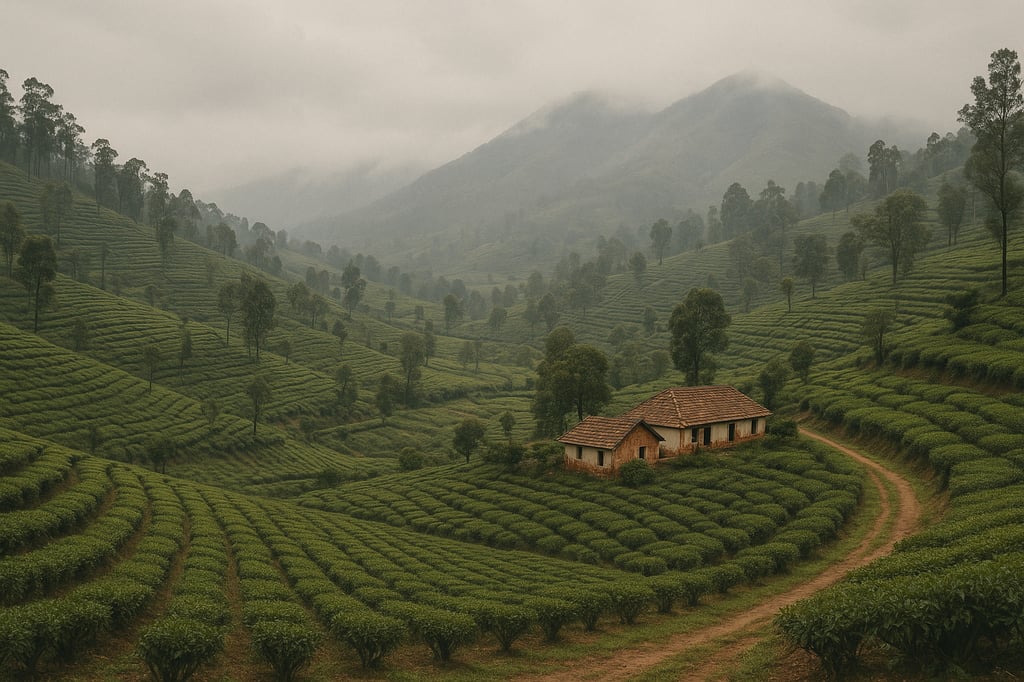
Nilgiris: High-Altitude Arabica from the “Blue Mountains”
The Nilgiris, in the Western Ghats of Tamil Nadu, are better known for tea, but they also produce some of South India’s most distinctive high-altitude Arabica. Cool temperatures, misty slopes and diverse shade trees shape a mild yet aromatic cup that’s increasingly valued in specialty circles.
How coffee came to the Nilgiris
Coffee reached the Nilgiri Hills in the early–mid 19th century, as the British expanded plantation crops beyond Karnataka.
Records mention coffee being planted on the Dawson estate in 1838, followed by a property at Kardathorai near Kotagiri in 1840; British official M. D. Cockburn also opened estates on the Kotagiri Ghat.
By the 1860s, coffee estates were scattered across the district, but many early plantations were later hit hard by leaf diseases, and a large part of the region eventually shifted towards tea.
From early estates to indigenous smallholdings
While large colonial estates dominated the early phase, coffee in the Nilgiris today is strongly associated with indigenous communities, especially the Irula and Kurumba peoples.
They grow coffee on their own lands at around 900–1,500 m above sea level, usually as part of mixed, traditional farming systems rather than monocrop estates.
These farms typically integrate coffee with fruit trees and spices, creating a resilient, biodiversity-rich agroforestry landscape in the hills.
Varieties, shade and spice
Nilgiris coffee is almost always shade-grown under multi-layer canopies: silver oak, jackfruit, mango, citrus, jack, and native forest species, with pepper vines and other spices climbing the shade trees.
On these farms you’ll often find:
- Arabica as the flagship, favoured at higher elevations
- Robusta, and in some cases Liberica, grown alongside Arabica by small farmers
The cup profile for Nilgiris Arabica is usually described as:
- Light to medium body
- Bright, fruity acidity
- Aromatic, with floral, herbal, wild-fruit and gentle spice notes
Nilgiris’ modern coffee identity
Today, Tamil Nadu accounts for around 5% of India’s coffee output, and within that, the Nilgiris have carved out a reputation as a high-altitude Arabica district with a distinct flavour signature.
Modern Nilgiris coffee is synonymous with:
- High-elevation Arabica from the Blue Mountains
- Indigenous smallholder farming, especially Irula and Kurumba growers
- Shade-grown, intercropped systems with pepper, citrus, jackfruit and other spices and fruits
- Tourism and estate stays, where coffee, tea and cool-climate landscapes come together
For many drinkers, “Nilgiris” on a bag signals a softer, aromatic South Indian coffee: bright, elegant and often subtly fruity, rather than heavy or earthy.
Taste Nilgiris
Experience the unique flavors of this exceptional region in our curated selection.
Shop Coffees